

curriculum
Curriculum / Study Guides
How do stories of women in Torah reflect the complexity of our own lives? How can art help us deepen our connections to these ancient texts? The Girls in Trouble Curriculum brings women in Torah to life through art, text, and personal reflection.
The Curriculum is a series of modular study guides created by musician and Jewish educator Alicia Jo Rabins. Study guides are geared towards teens and adults; some can be adapted for younger learners. Whether you are looking to go deep on your own, in a small group, or to lead a class, come join us on a creative journey into the world of women in Torah!
Each study guide includes the following: a beautifully designed PDF with sources, annotations, Alicia’s essays, and guiding questions; a PowerPoint; and an mp3 of the Girls in Trouble song. (When you purchase a unit, you’ll receive a download link to a folder containing the above files). Explore a single unit, combine in any order to make a series, or purchase the whole curriculum at a discount!
Want to test it out first? Email us at girlsintroublemusic@gmail.com and we’ll send you the full Miriam study guide (one of our most popular units), completely free!

Visit Miriam in the desert, head into the enemy general’s tent with Judith, carry out a forbidden seduction with Tamar and explore twenty-one other units revealing the complicated lives of Biblical women.
This bundled package includes all 24 units of the Girls in Trouble Curriculum: 11 standard units and 13 extended units containing visual art, midrashim, and more. Comes as a beautifully designed pdf document with download link to Dropbox folders of each unit.
Note: this version is licensed for one person/household. Use it for your own study, or an informal small group such as chavruta, book group, or Rosh Chodesh circle. Teaching this in a classroom, congregation, or organized program? You'll need the Institutional & Groups version of this curriculum, which permits reproduction for students and covers everyone at your institution.
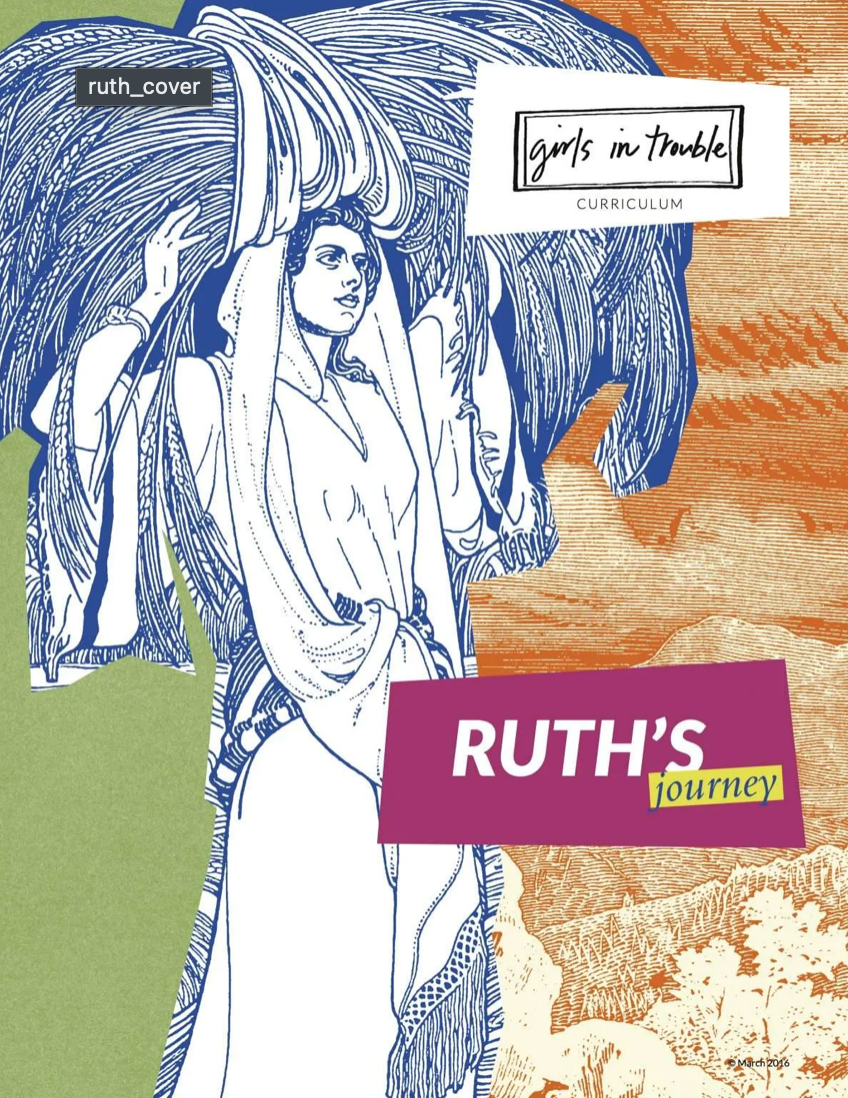
There are many ways to interpret the Book of Ruth. We focus on Ruth’s astonishing self-transformation, and how her story might inspire us to make courageous decisions in our own lives.
Ruth repeatedly risks failure, heartbreak, rejection, censure. Through her bold choices, she transforms her life entirely. What bold risks might we take in our own lives? What unimagined future might lie ahead of us if we are brave enough to leave the familiar and set out for parts unknown?
Note: Pricing above ($36) is for institutions and large groups.
If you’re studying solo, cost is $5 - use discount code INDIVIDUAL.
If you’re in a small group (2-6 people), cost is $18 - use discount code SMALLGROUP.
Or, pay full price and directly support Girls in Trouble, if you are able!

Miriam is celebrated for her leadership and prophecy throughout Exodus. But later in the Torah, as the Israelites wander in the desert, God strikes Miriam with leprosy, and she is exiled from the camp for seven days. How does this episode fit into the rest of Miriam’s life? How might she feel about this experience? And how can this story guide us through challenging moments in our own lives?
Note: Pricing above ($36) is for institutions and large groups.
If you’re studying solo, cost is $5 - use discount code INDIVIDUAL.
If you’re in a small group (2-6 people), cost is $18 - use discount code SMALLGROUP.
Or, pay full price and directly support Girls in Trouble, if you are able!
If you’re using discount codes, please note that Squarespace does not allow multiple codes in one order. For multiple sliding-scale study guides, please complete them as separate purchases or consider our full curriculum bundle ($36 for individuals, $180 for small groups).
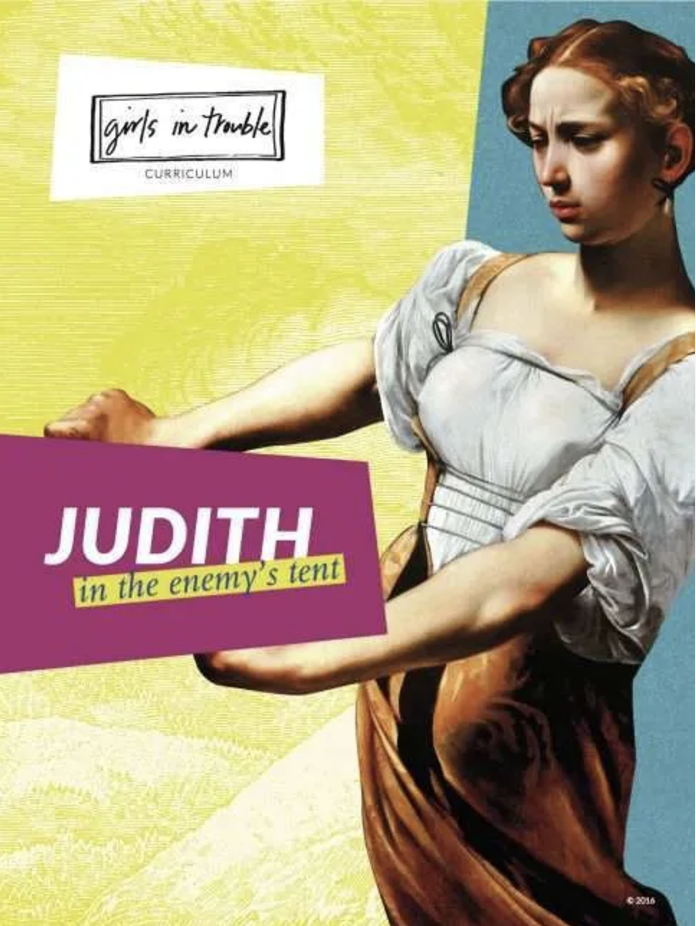
Judith is a powerful mystery, a study in contrasts and transformation. One moment she is a young widow wearing sackcloth and ashes in a city under siege. In the next, she walks directly into the enemy camp, beautifully adorned, and saves her people through a grisly act of violence. Which version of Judith speaks to you: the warrior, the seductress, the hero, the shapeshifter?
Note: Pricing above ($36) is for institutions and large groups.
If you’re studying solo, cost is $5 - use discount code INDIVIDUAL.
If you’re in a small group (2-6 people), cost is $18 - use discount code SMALLGROUP.
Or, pay full price and directly support Girls in Trouble, if you are able!
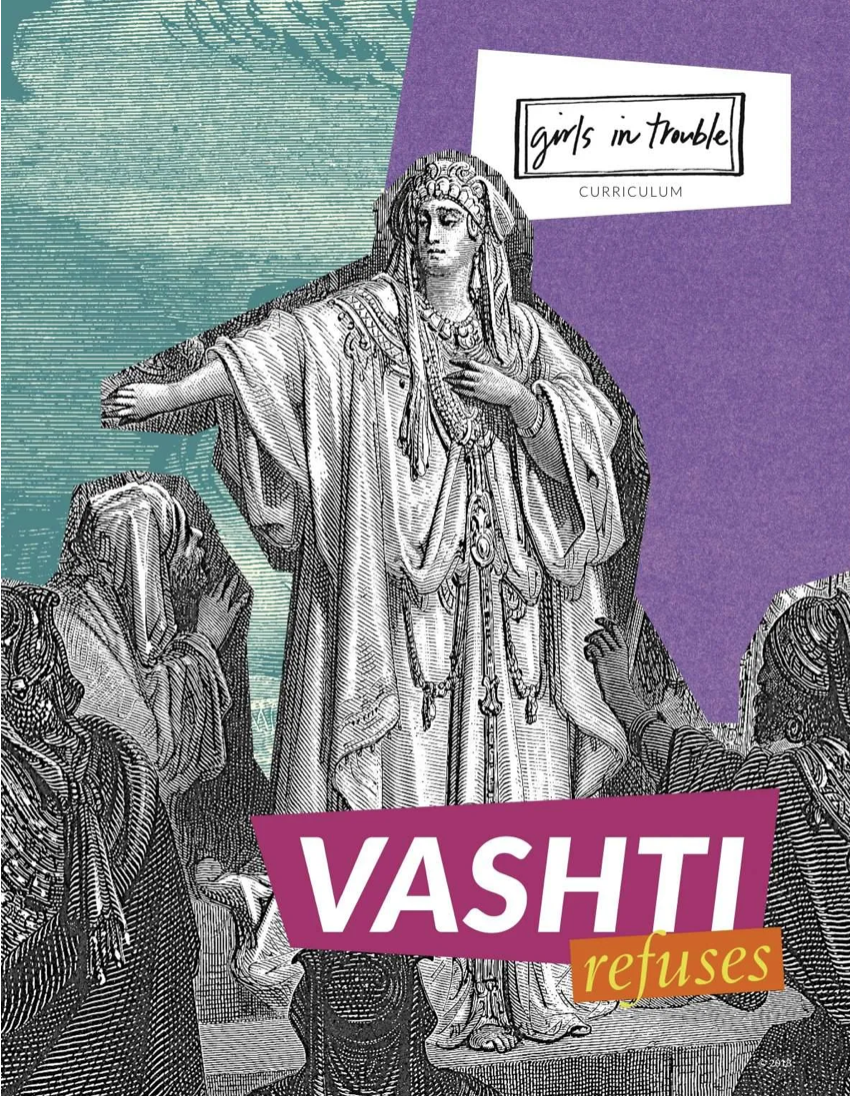
During a drunken feast, the King commands Queen Vashti to display her beauty before the men of the kingdom. Vashti refuses, and as punishment, she is exiled from the palace. Famously, she’s followed by Queen Esther – but here we focus on Vashti, and her decision to choose her dignity over her queenship.
Is dressing up for others a source of power and pleasure, or a way of hiding our true selves? What can we learn from Vashti about living authentically and refusing to conform? How can she help us follow our inner voice, even when it means letting go of privilege?
Note: Pricing above ($36) is for institutions and large groups.
If you’re studying solo, cost is $5 - use discount code INDIVIDUAL.
If you’re in a small group (2-6 people), cost is $18 - use discount code SMALLGROUP.
Or, pay full price and directly support Girls in Trouble, if you are able!
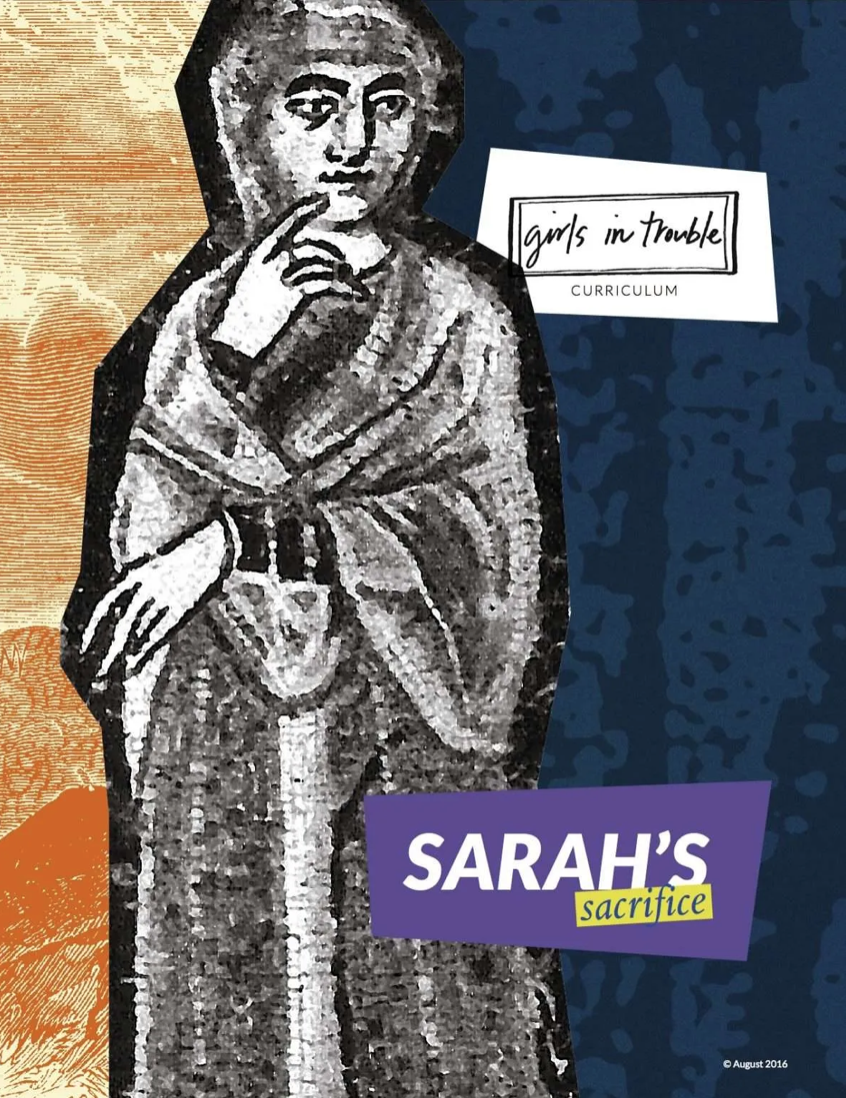
The Binding of Isaac is one of the most challenging stories in Judaism. It’s even more complex when imagined from the perspective of Isaac’s mother, Sarah.
Long ago, the rabbis noticed Sarah’s absence from the original story. They wrote numerous midrashim (rabbinic commentaries) to fill in this gap. Since the Torah describes Sarah’s death almost immediately after Isaac’s binding, the Rabbis connect the two events. They suggest that Sarah dies because of the Binding of Isaac. A number of artists have followed this train of thought as well, and in this unit, we explore some of their work. Focusing on Sarah, we experience a fuller picture of this heightened moment. We broaden the spotlight of ethical questions beyond the relationship between father, son, and God. We invite the mother in.
Note: Pricing above ($36) is for institutions and large groups.
If you’re studying solo, cost is $5 - use discount code INDIVIDUAL.
If you’re in a small group (2-6 people), cost is $18 - use discount code SMALLGROUP.
Or, pay full price and directly support Girls in Trouble, if you are able!
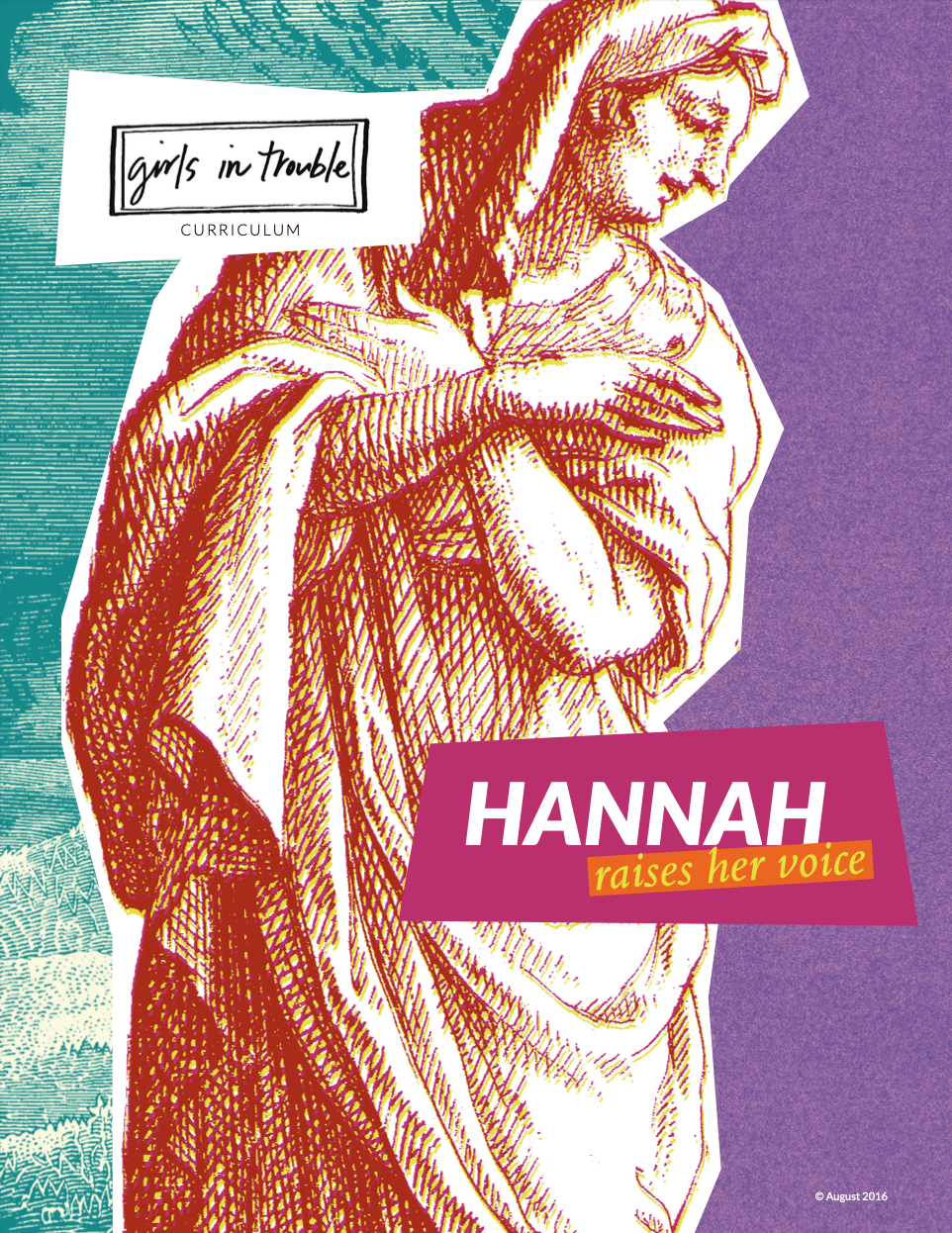
What do we do when we want something we can’t have? Do we simply accept its absence, or do we try everything we can to find a way to fulfill our longing? Do we accept our life for what it is, or try to change it? What are the risks and costs of each of these decisions? And how should we approach the Divine – with humility or chutzpah?
Hannah’s story carries us through various approaches to these questions. One of many women in the Torah who suffers because of difficulty conceiving a child, Hannah can be a model for dealing with our desires and disappointment, a companion in our times of suffering, and an inspiration for our power to find a way out. Hannah is a model for asking for what we really want – and maybe even demanding it.
Note: Pricing above ($36) is for institutions and large groups.
If you’re studying solo, cost is $5 - use discount code INDIVIDUAL.
If you’re in a small group (2-6 people), cost is $18 - use discount code SMALLGROUP.
Or, pay full price and directly support Girls in Trouble, if you are able!

Deception, sexuality, and a surprising move for power by a woman who seems to have none at all: Tamar’s tale is as dramatic and gripping as the best television. Her story raises important questions about our obligations to each other, how to use our sexuality, and what it means to be truly seen. It is one of those powerful Torah stories that reflects the complexities of human experience, mirroring the radiant, compromised reality of our lives.
Note for teachers of younger students: this lesson is rated PG-13. The Biblical story centers around a sexual encounter. Also, two of the images depict Tamar half-clothed. Leave these images out if they are inappropriate for your classroom.
Note: Pricing above ($36) is for institutions and large groups.
If you’re studying solo, cost is $5 - use discount code INDIVIDUAL.
If you’re in a small group (2-6 people), cost is $18 - use discount code SMALLGROUP.
Or, pay full price and directly support Girls in Trouble, if you are able!

Sisterhood is powerful; it’s also powerfully complicated. This unit considers the stunningly complex relationship between two of the most famous sisters in Torah, Rachel and Leah, whose lives were enmeshed from girlhood until death.
Rachel and Leah are made from the same genetic material; they grow up in the same household and marry the same man; yet they move through the world differently and are treated differently by the people around them. Their story includes the full range of siblinghood: allegiance and struggle, love and resentment, loyalty and betrayal. Which threads of the sisters’ story speak to you?
Note: Pricing above ($36) is for institutions and large groups.
If you’re studying solo, cost is $5 - use discount code INDIVIDUAL.
If you’re in a small group (2-6 people), cost is $18 - use discount code SMALLGROUP.
Or, pay full price and directly support Girls in Trouble, if you are able!

Lilith is a mystical, mysterious creature. Although her story does not appear in the Torah, her legend has been passed on for over three thousand years. Her story varies wildly; she is sometimes feared as a destructive force, and other times beloved as a symbol of female liberation.
In this study guide you will encounter demons, angels, magic, incantations, and radical re-imaginings of the story of Creation. You will also find contemporary feminist thinkers, artists, and writers reclaiming Lilith’s compelling power in modern times. To follow Lilith’s journey is to experience a prism of relationships to female power. Demoness or heroine: which version will you choose? Or will you imagine a new Lilith?
Note for teachers: proceed with caution. An essential aspect of Lilith’s story deals with sex and sexuality, and some of the images in this unit contain depictions of Lilith nude.
Note: Pricing above ($36) is for institutions and large groups.
If you’re studying solo, cost is $5 - use discount code INDIVIDUAL.
If you’re in a small group (2-6 people), cost is $18 - use discount code SMALLGROUP.
Or, pay full price and directly support Girls in Trouble, if you are able!
If you’re using discount codes, please note that Squarespace does not allow multiple codes in one order. For multiple sliding-scale study guides, please complete them as separate purchases or consider our full curriculum bundle ($36 for individuals, $180 for small groups).

A father’s death leads to a legal debate about women’s rights, family continuity, what we inherit, and the struggle for justice. The daughters of Tzelofchad reflect the power of ordinary people to speak up, fight for dignity, and change society.
Tzelofchad has five daughters and no sons. Only men can inherit land in the ancient Israelite system, so when he dies, his daughters realize they will be left without any land. Perceiving an injustice, they become legal activists. They bring their case before Moses and God – and they win. Not only will the five daughters themselves receive land, but a precedent is set for female inheritance.
Note: Pricing above ($36) is for institutions and large groups.
If you’re studying solo, cost is $5 - use discount code INDIVIDUAL.
If you’re in a small group (2-6 people), cost is $18 - use discount code SMALLGROUP.
Or, pay full price and directly support Girls in Trouble, if you are able!
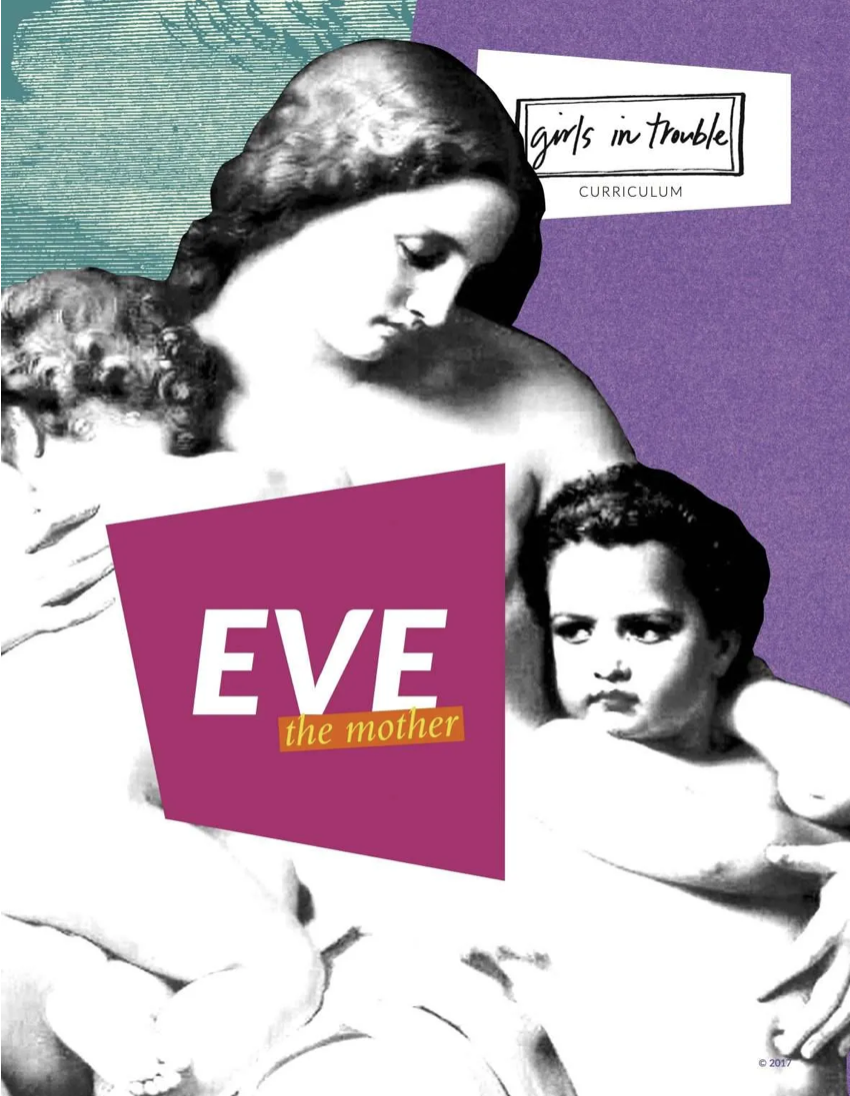
Famous for her role as the first woman, Eve is less often considered as the very first mother. What might her complicated experience teach us about the nature of parenthood and love itself?
After all, Eve was completely on her own as a mother. She had no mother of her own, no women friends, no parenting blogs. How can we imagine Eve’s experience? What does it mean that the first mother has such a complex and ultimately tragic experience of motherhood? And how can we reconcile Eve’s power as the Mother of all Living with her powerlessness as the mother of two feuding sons?
Note: Pricing above ($36) is for institutions and large groups.
If you’re studying solo, cost is $5 - use discount code INDIVIDUAL.
If you’re in a small group (2-6 people), cost is $18 - use discount code SMALLGROUP.
Or, pay full price and directly support Girls in Trouble, if you are able!

We never learn her name. In English, she is called Jephthah’s Daughter; in Hebrew, Bat Yiftach. This is a story of faith, danger, and sacrifice, in which a young girl loses her future because of a few careless words spoken by her father. And yet a careful reading seems to reveal that Yiftach’s Daughter may have more agency than appears at first glance. The story of Yiftach’s daughter is one of the most fascinating and neglected passages in the Hebrew Bible, raising compelling questions about the consequences of our actions, the danger of blind faith, and the true meaning of power.
Warning: The story of Yiftach’s Daughter, as written in the Hebrew Bible, deals with child sacrifice and may not be appropriate for all students.
Note: Pricing above ($36) is for institutions and large groups.
If you’re studying solo, cost is $5 - use discount code INDIVIDUAL.
If you’re in a small group (2-6 people), cost is $18 - use discount code SMALLGROUP.
Or, pay full price and directly support Girls in Trouble, if you are able!
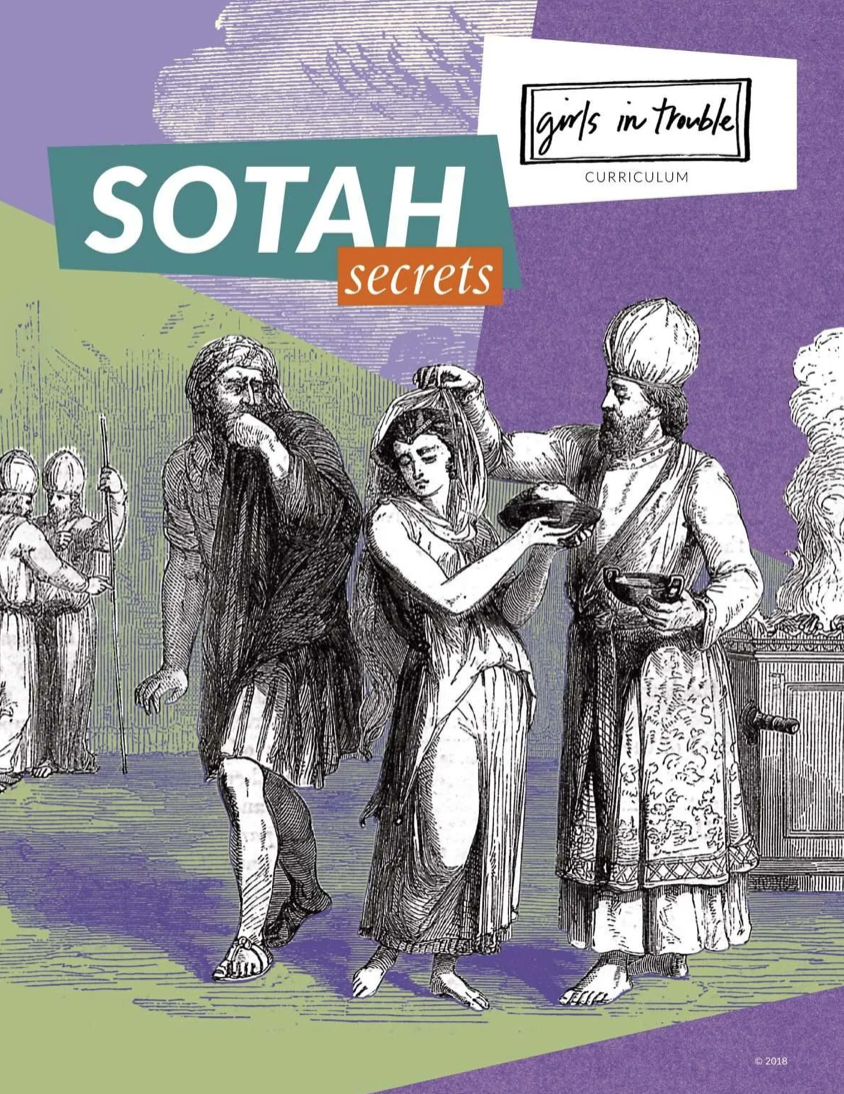
Sexuality and jealousy; secrets and shame. The Sotah is not a character, but a category: a woman whose husband is convinced that she’s been unfaithful, but cannot prove it. What follows is a ritual which will either harm her – or set her free.
The Sotah is made to undergo this humiliating ritual at the hands of the High Priest – drinking a bitter, magical potion which will have terrible effects on her body if she is, indeed, guilty. Is this ritual a manifestation of the power men have over their wives in this society? Or is it a way to help rescue a woman from the torture of living with a chronically jealous husband? And what does it tell us about how we treat each other, the power of communal ritual, and how to heal our most intimate relationships?
Note: Pricing above ($36) is for institutions and large groups.
If you’re studying solo, cost is $5 - use discount code INDIVIDUAL.
If you’re in a small group (2-6 people), cost is $18 - use discount code SMALLGROUP.
Or, pay full price and directly support Girls in Trouble, if you are able!

The Biblical poem at the heart of this unit is an ode to the ideal woman, called Eshet Chayil – in English, “A Woman of Valor.”
While the language is beautiful, and many people love this poem, for others it raises questions. What does “ideal woman” mean? Who defines “ideal” (or “valor”)? And how does this ancient poem fit with contemporary ideas about gender?
In this unit, we consider a range of approaches to Eshet Chayil – feminist, midrashic, mystical, and modern. We offer Girls in Trouble’s interpretation, a folk-Americana love song to women everywhere, and we invite you to create your own. What’s your interpretation of “A Woman of Valor?” How do you honor the women in your life?
Note: Pricing above ($36) is for institutions and large groups.
If you’re studying solo, cost is $5 - use discount code INDIVIDUAL.
If you’re in a small group (2-6 people), cost is $18 - use discount code SMALLGROUP.
Or, pay full price and directly support Girls in Trouble, if you are able!

This study guide is a meditation on the complexity of how we witness suffering – our own, and each other’s.
In this unit, we follow Hagar and her son Ishmael into the wilderness. We keep Hagar company during her darkest moment, when it seems that Ishmael is about to die of thirst. And we ask: what can we learn from Hagar’s response to Ishmael’s suffering? And what can witnessing Hagar’s suffering teach us about our own responses to suffering?
Note: Pricing above ($36) is for institutions and large groups.
If you’re studying solo, cost is $5 - use discount code INDIVIDUAL.
If you’re in a small group (2-6 people), cost is $18 - use discount code SMALLGROUP.
Or, pay full price and directly support Girls in Trouble, if you are able!
If you’re using discount codes, please note that Squarespace does not allow multiple codes in one order. For multiple sliding-scale study guides, please complete them as separate purchases or consider our full curriculum bundle ($36 for individuals, $180 for small groups).

In the story, Lot’s wife is warned not to look back while fleeing her home of Sodom. But she does, and is turned into a pillar of salt. How does Lot’s wife feel about leaving her home – relieved, or heartbroken? Does she look back out of rebellion, nostalgia, or simple curiosity?
And what about us: how can we let go of the past, while holding on to what we love?
Note: Pricing above ($36) is for institutions and large groups.
If you’re studying solo, cost is $5 - use discount code INDIVIDUAL.
If you’re in a small group (2-6 people), cost is $18 - use discount code SMALLGROUP.
Or, pay full price and directly support Girls in Trouble, if you are able!
If you’re using discount codes, please note that Squarespace does not allow multiple codes in one order. For multiple sliding-scale study guides, please complete them as separate purchases or consider our full curriculum bundle ($36 for individuals, $180 for small groups).
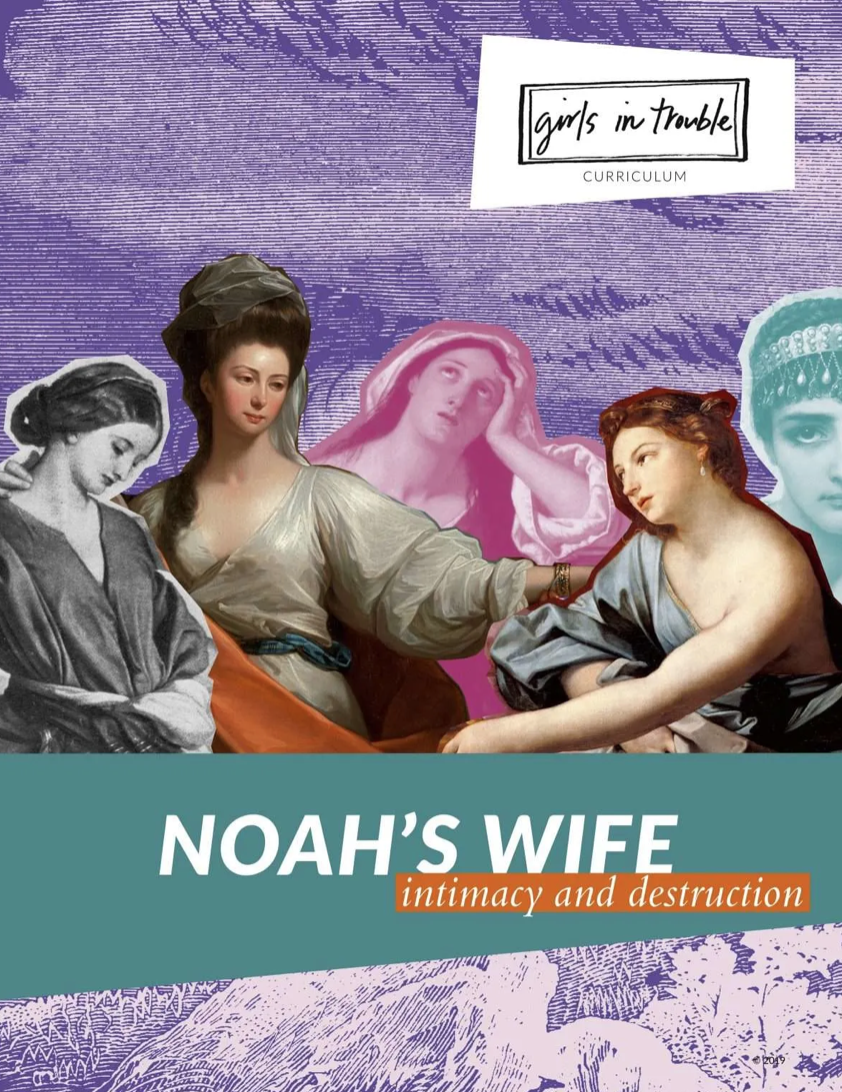
A husband suddenly undertakes a massive construction project. Rain begins to fall and does not stop. Everyone you know is left behind as you sail away with your family in a boat full of animals.
Though the star of this story as told in the Torah is Noah, none of us is a supporting actor in our own lives. How would Noah’s wife feel about this episode? Would she worry about her husband, who suddenly hears the voice of God and begins building a giant boat? Would she feel resent the fact that she’s never spoken to directly? And after the earth dried, would she have survivor’s guilt, thinking of all the friends and family who drowned? Imagine being the wife of Noah. How would you feel?
Note: Pricing above ($36) is for institutions and large groups.
If you’re studying solo, cost is $5 - use discount code INDIVIDUAL.
If you’re in a small group (2-6 people), cost is $18 - use discount code SMALLGROUP.
Or, pay full price and directly support Girls in Trouble, if you are able!
Desire is a potent force. It can be a source of devotion or despair; it can bring us together, or drive us apart.
The mystery of human desire is at the heart of the story of Potiphar’s wife and her longing for Joseph. In this unit, we consider this Biblical story – full of drama, false accusations, and unrequited passion – as well as rabbinic and Islamic retellings which raise deeper questions about the nature of longing, human desire, and even our relationship to the Divine.
What role does desire play in our own lives? How can the story of Potiphar’s wife help us understand our own relationship to this powerful emotion? And what might rabbinic and Islamic interpretations of this story teach us about the meaning of desire?
Note: Pricing above ($36) is for institutions and large groups.
If you’re studying solo, cost is $5 - use discount code INDIVIDUAL.
If you’re in a small group (2-6 people), cost is $18 - use discount code SMALLGROUP.
Or, pay full price and directly support Girls in Trouble, if you are able!

How can Jewish mystical ideas help us understand the power of love to transcend life and death? What does it mean to open our eyes to realities beyond the visible? And how can music, imagination and sacred text combine to help us consider the profound mysteries of human connection?
This song and unit delves deeply into these questions through one element of Rebecca’s life: her relationship to her late mother-in-law, Sarah. Although the two women never meet, Sarah’s presence is strong in the world Rebecca enters. Weaving artistic interpretation with mystical traditions, this song is an imagined message between two foremothers who were intimately connected, but never got to meet – except, perhaps, in dreams.
Note: Pricing above ($36) is for institutions and large groups.
If you’re studying solo, cost is $5 - use discount code INDIVIDUAL.
If you’re in a small group (2-6 people), cost is $18 - use discount code SMALLGROUP.
Or, pay full price and directly support Girls in Trouble, if you are able!

Anger. Violence. Riddles. Power plays. Samson’s first wife faces a new husband who uses all of these to wield his power over his enemies – and over his new bride.
In our retelling of this story, Samson’s first wife is up to the challenge, using what little agency she has to better her situation within an incurably violent society. How do you read Samson’s first wife? Is she a pawn in Samson’s manipulative games, or a brilliant strategist?
Note: Pricing above ($36) is for institutions and large groups.
If you’re studying solo, cost is $5 - use discount code INDIVIDUAL.
If you’re in a small group (2-6 people), cost is $18 - use discount code SMALLGROUP.
Or, pay full price and directly support Girls in Trouble, if you are able!
If you’re using discount codes, please note that Squarespace does not allow multiple codes in one order. For multiple sliding-scale study guides, please complete them as separate purchases or consider our full curriculum bundle ($36 for individuals, $180 for small groups).

A singer-songwriter who uses music to heal; a wise woman who corrects the rabbis; a mystical character who transcends death. Though Serakh bat Asher is barely referred to in the Torah itself, she comes to life in rabbinic legend as a musician, teacher and healer.
These legends about Serakh bat Asher honor the healing potential of art and spiritual practice, and the human capacity to make beauty out of what we know to be true. In a world which often values external authority, how can Serakh’s story help us connect with our own wisdom, sensitivity and experience?
Note: Pricing above ($36) is for institutions and large groups.
If you’re studying solo, cost is $5 - use discount code INDIVIDUAL.
If you’re in a small group (2-6 people), cost is $18 - use discount code SMALLGROUP.
Or, pay full price and directly support Girls in Trouble, if you are able!
This unit is about a sex-positive rabbinic legend – one which speaks to the importance of play, humor, pleasure and creativity as a life-giving force within long-term commitment.
The story of the Israelite Women in Egypt helps us consider: how can we nurture and tend to romantic love when it is no longer shiny and new? And more broadly, how can creativity and playfulness help us navigate difficult moments in our lives?
Note: Pricing above ($36) is for institutions and large groups.
If you’re studying solo, cost is $5 - use discount code INDIVIDUAL.
If you’re in a small group (2-6 people), cost is $18 - use discount code SMALLGROUP.
Or, pay full price and directly support Girls in Trouble, if you are able!
The wise-hearted women and men of this unit use their creativity to build a sacred space, the Mishkan (or Tabernacle). The Mishkan, where the Divine Presence dwells on earth, is an important part of the Israelites’ journey in the desert. Though it is a home for God, it is created not by God, but by the Israelites themselves, who use metalworking, weaving, woodworking, jewelry-making, and other skills to fabricate this physical manifestation of holiness.
This unit considers the relationship between creativity and the sacred. What can these wise-hearted men and women teach us about appreciating our own creativity? And how can we use our skills and abilities to bring holiness into the world?
Note: Pricing above ($36) is for institutions and large groups.
If you’re studying solo, cost is $5 - use discount code INDIVIDUAL.
If you’re in a small group (2-6 people), cost is $18 - use discount code SMALLGROUP.
Or, pay full price and directly support Girls in Trouble, if you are able!
If you’re using discount codes, please note that Squarespace does not allow multiple codes in one order. For multiple sliding-scale study guides, please complete them as separate purchases or consider our full curriculum bundle ($36 for individuals, $180 for small groups).

Two very different women fight to save the Israelites from oppression in this story. Deborah, a political and military leader who counsels her people and leads them into battle; Yael, a regular civilian who allows the enemy general into her tent, then kills him with a tent peg.
The story of Yael and Deborah swirls with the wild energy of opposing, complementary forces: love and war, power and vulnerability, threat and hope, public and private, feminine and masculine, life and death. What can we learn from this ancient story of women leaders? What would happen if these two characters met one another? What would they say to each other?
Note: Pricing above ($36) is for institutions and large groups.
If you’re studying solo, cost is $5 - use discount code INDIVIDUAL.
If you’re in a small group (2-6 people), cost is $18 - use discount code SMALLGROUP.
Or, pay full price and directly support Girls in Trouble, if you are able!
Visit Miriam in the desert, head into the enemy general’s tent with Judith, carry out a forbidden seduction with Tamar and explore twenty-one other units revealing the complicated lives of Biblical women.
This bundled package includes all 24 units of the Girls in Trouble Curriculum: 11 standard units and 13 extended units containing visual art, midrashim, and more. Comes as a beautifully designed pdf document with download link to Dropbox folders of each unit, including mp3’s of each song.
Note: This license covers your whole institution. Any number of teachers may use it, and you may reproduce units for your students in print or digitally. Suitable for congregational learning, day schools, religious schools, adult education, university courses, and community programs; used in classrooms and adult education programs across the country.